Advice about nail biting tends to arrive as folklore: put something bitter on it, get long acrylics so you cannot bite, just stop once your nails look nice. Some of that is true, some is false, and the useful middle is where most people in Denver actually quit, slowly, with short nails and a routine. Sorting the claims matters because the false ones set people up to fail and then blame themselves for a plan that was never sound.
At N Spa Nails in Denver, a biting habit is treated as a normal salon topic, not an embarrassment. Manicures, gel, acrylic, and dip are all tools in this conversation, but the table comes first.
The claims, sorted
| Claim | Verdict | Why |
|---|---|---|
| Biting is just a bad habit you can stop by willpower | False | It is a habit loop with triggers like stress, boredom, and rough edges. Removing triggers and smoothing edges works better than resolve alone. |
| Long extensions will stop biting | False, usually | Bitten nails are short and often damaged, so long sets lift and give more to pick at. Most people do better starting short and neat. |
| Bitter polish helps | True, for many | The taste creates a pause between impulse and bite, which is often enough to break the automatic part of the loop, especially early on. |
| A gel layer can protect short nails while they grow | It depends | A thin, short overlay seals edges and changes the feel, which helps some people. If you bite through product, plain manicures are the safer phase. |
| Once nails look good, the habit is over | False | Appearance helps motivation, but triggers remain. People who keep a file handy and a regular tidy-up booked relapse less than people relying on pride. |
| Bitten nails and sore skin should be covered with a set | False | Broken, inflamed, or infected skin needs healing and possibly medical care first. Product over it hides the problem and can trap irritation. |
What actually helps, in practice
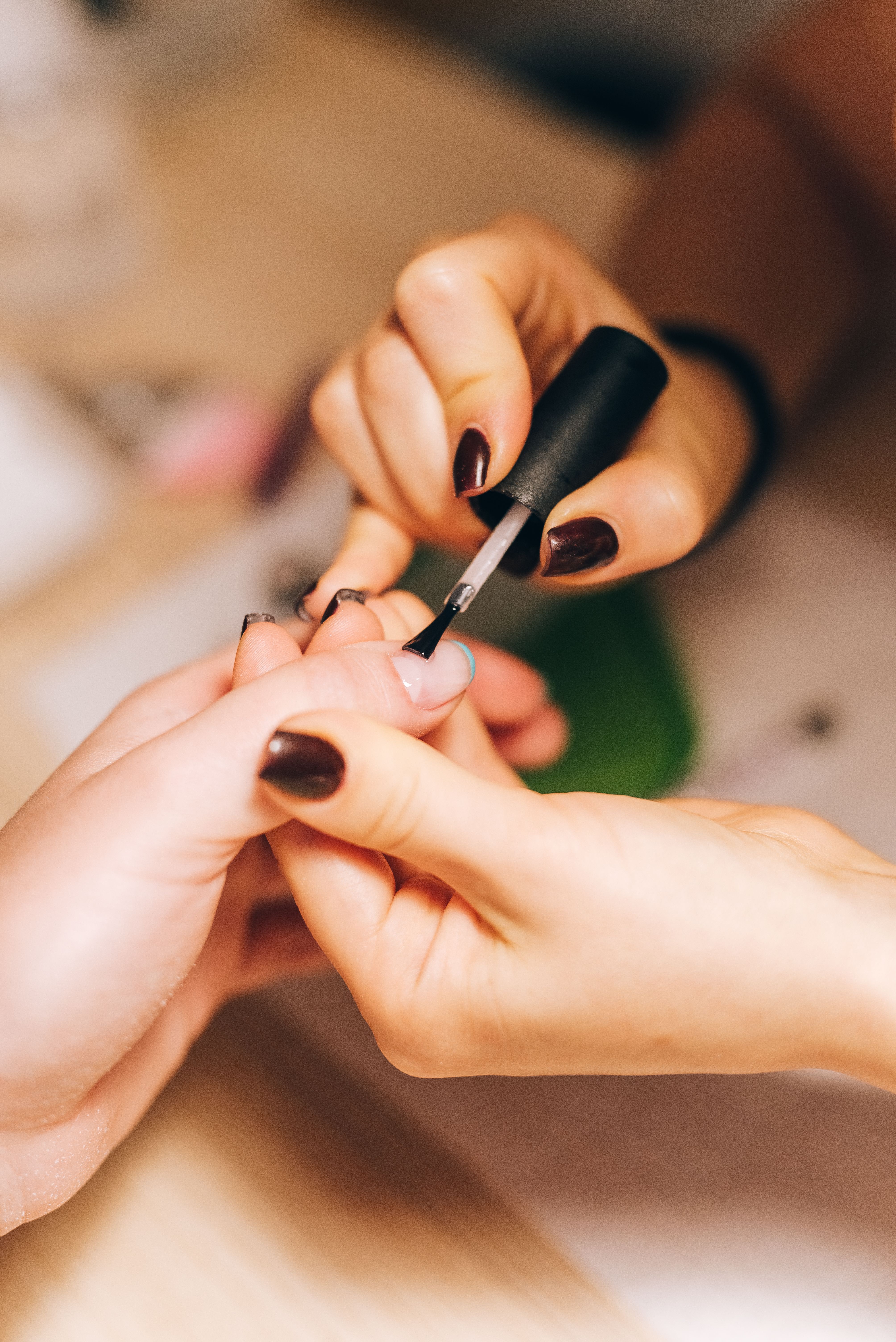
The pattern that works is unglamorous: keep nails short and filed so there is nothing to catch, keep the skin around them moisturized so hangnails stop offering starting points, use bitter polish as a speed bump, and keep appointments close together at first so a rough week gets tidied before it becomes a reset. Add one substitute behavior for your main trigger, gum in the car, a pen in meetings, a file on the couch, and the loop weakens from several directions at once. Progress is usually measured in weeks with fewer sore fingertips, not in a single heroic day, and a photo every week shows change your memory will otherwise talk you out of.
The shame part, addressed directly
Technicians have seen every version of bitten nails, including nails bitten to the quick with sore skin around them, and a professional response is a plan, not a reaction. You do not need to apologize for the state of your hands in a Denver salon, and you do not need to wait until your nails improve before booking, because that logic delays the very routine that improves them. If shame has been the barrier, book the plainest service on the menu, a classic manicure, short and clear. The first appointment is the hardest one to make and the easiest one to attend.

When biting points to something else
Most nail biting is a habit, full stop. Occasionally the skin tells a different story: repeated infections beside the nail, fingers bitten until they bleed regularly, or a habit tied to anxiety that is disrupting work and sleep. Those patterns deserve a conversation with a clinician, who can treat infection and talk through the anxiety side honestly. A salon routine and medical support are not rivals here. The salon handles edges, skin, and structure; the clinician handles anything inflamed, infected, or bigger than a habit.
Common questions
What should I ask for at my first appointment as a nail biter?
Ask for a classic manicure, short and neat, with a clear or sheer finish and bitter polish if available. Book the next tidy-up about two weeks out before you leave.
Is gel a good idea on bitten nails?
Sometimes, as a thin, short layer once the skin has healed. If you tend to bite or pick through product, start with plain manicures and add structure later when the habit has loosened.
How long until I see a difference?
Skin often looks calmer within a couple of weeks of leaving it alone, and visible nail growth follows at roughly three millimeters a month. Weekly photos make the progress easier to trust.
Photos in this guide are representative stock images.
← All guides from N Spa Nails← Back to N Spa Nails